
Vera Therapeutics ORIGIN 3 final data back TRUTAKNA full approval bid

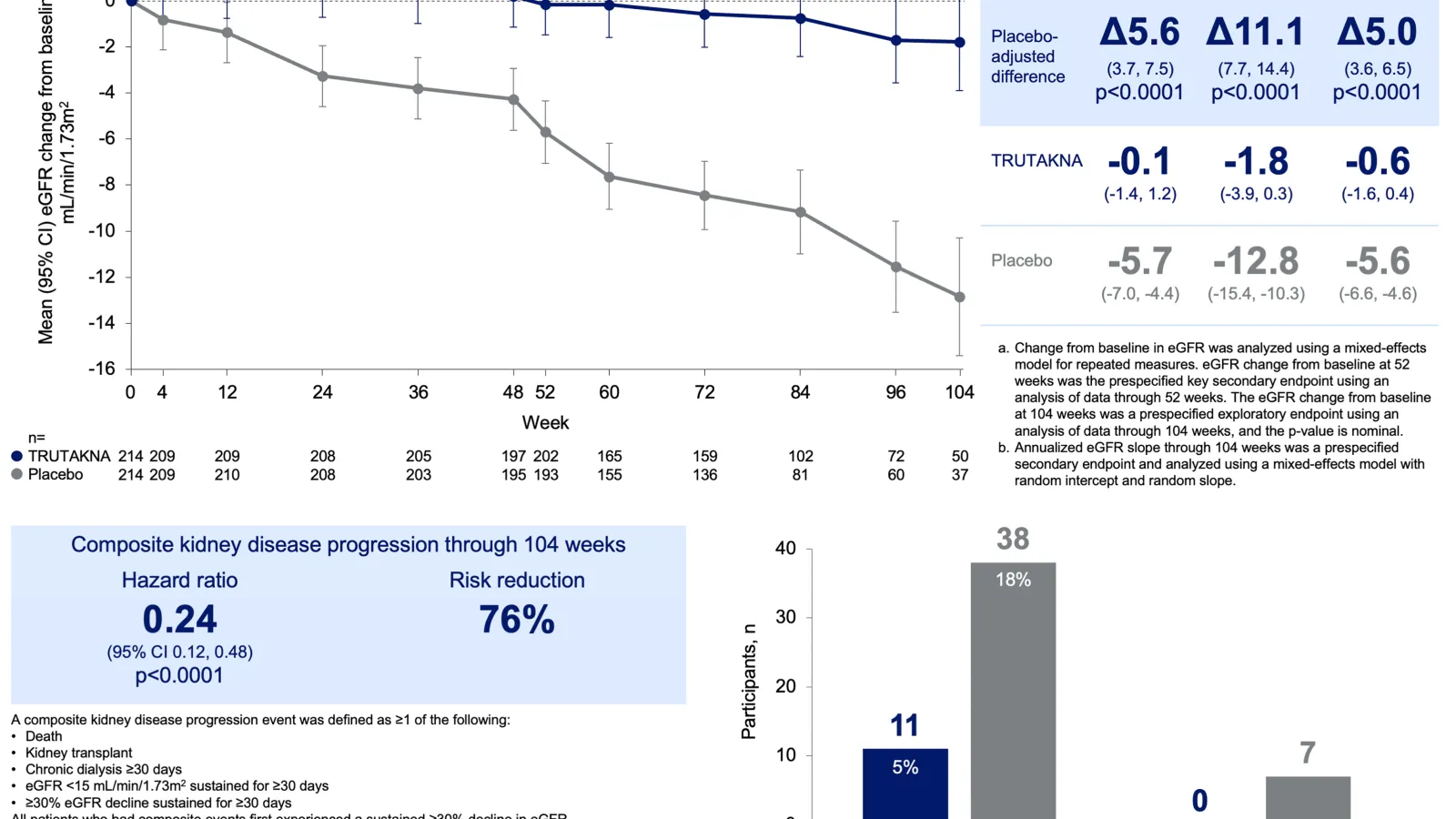
Vera Therapeutics has published the final efficacy analysis of its ORIGIN 3 Phase 3 trial, reporting that TRUTAKNA (atacicept-vymj) achieved statistical significance across all prespecified endpoints in adults with primary IgA nephropathy (IgAN) at risk of disease progression. The data were presented as a featured late-breaking oral session at the American Society of Nephrology Kidney Week 2026 on 22 October and simultaneously published in the New England Journal of Medicine, a pairing that signals a high level of clinical confidence from both the company and the medical community.
TRUTAKNA already holds accelerated FDA approval for the reduction of proteinuria in IgAN. The ORIGIN 3 final data are intended to support a supplemental biologics licence application (sBLA), which Vera said it plans to file in the fourth quarter of 2026, targeting full approval in 2027.
What the data show
The trial's primary endpoint, a statistically significant reduction in urine protein-to-creatinine ratio at 36 weeks, had already been met at an earlier interim readout. The final efficacy analysis extended those findings: TRUTAKNA achieved statistically significant improvements in estimated glomerular filtration rate (eGFR) change from baseline and annualised slope, as well as a reduction in composite kidney disease progression events. Additional secondary endpoints, including reductions in galactose-deficient IgA1 and haematuria, also reached significance.
The safety profile was broadly favourable. Adverse events occurred in 75% of TRUTAKNA-treated patients compared with 78% on placebo, and serious adverse events were recorded in 7% of the treatment group versus 15% on placebo. Infection rates were similar between arms (51% versus 52%), with no clinically relevant hypogammaglobulinaemia or opportunistic infections observed. There were no deaths in the TRUTAKNA group, compared with one in the placebo arm.
Jonathan Barratt, Mayer Professor of Renal Medicine at the University of Leicester and a principal investigator on the trial, said the results "achieved a physiologic rate of eGFR loss compared to the pathologic rate observed with placebo," adding that the findings "reflect the potential for disease modification and kidney protection in IgAN."
Market context and competitive landscape
IgAN has emerged as one of the most competitive rare-kidney-disease segments of the past two years. The approval environment has shifted markedly following the FDA's willingness to accept surrogate endpoints, including proteinuria reduction, to support accelerated approvals while confirmatory trial data mature. Sparsentan (from Travere Therapeutics), budesonide formulations, and a growing pipeline of complement inhibitors and endothelin receptor antagonists are all vying for position in a market where at least half of diagnosed patients may progress to kidney failure or death within two decades.
TRUTAKNA's dual inhibition of BAFF and APRIL is mechanistically distinct from these approaches. By suppressing both cytokines simultaneously, atacicept reduces the overproduction of galactose-deficient IgA1, the antigen that drives the disease's autoimmune cascade. The company's positioning of TRUTAKNA as potentially disease-modifying, rather than merely proteinuria-lowering, will be central to its commercial argument, though that claim remains contingent on longer-term kidney-function data.
The publication of confirmatory Phase 3 efficacy data in the New England Journal of Medicine substantially strengthens Vera's sBLA package. Assuming the FDA grants full approval in 2027 on the expected timeline, TRUTAKNA would convert from an accelerated to a standard approval, removing the regulatory overhang that has weighed on market uptake. Investors will be watching the sBLA submission date and any FDA advisory committee meeting that may accompany the review.