
Canon ultrasound scans living coral eggs in world-first experiment

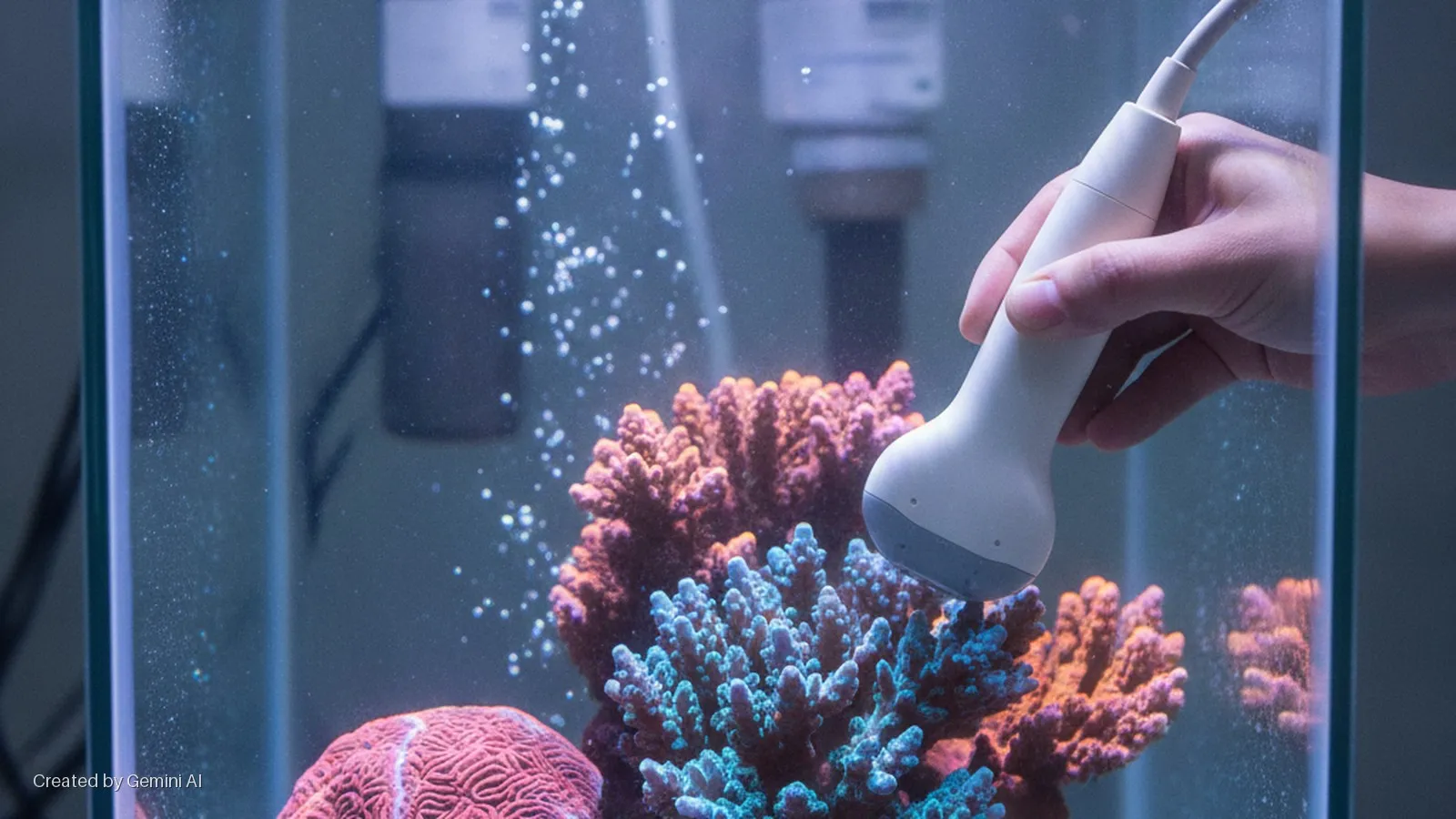
Coral Spawning International (CSI) has completed what it describes as the world's first ultrasound scan of living coral to identify developing eggs, using Canon Medical Systems' Aplio i700 platform in a collaboration announced on 9 November 2026.
Six species of large polyp stony (LPS) coral were scanned while fully submerged. The technique used high- and ultra-high frequency probes to resolve internal structures without cutting into the animals, which conventional reproductive assessment methods require. CSI says the approach will allow researchers to predict spawning windows more accurately, with direct benefits for conservation planning and coral propagation programmes.
The experiment
To confirm that the structures visible in the scans were indeed eggs, the team fragmented a specimen of trachyphyllia geoffroyi and cross-referenced macro photography with the scan images. The comparison validated the ultrasound findings, establishing the technique as a viable non-invasive pregnancy test for coral.
Dr Jamie Craggs, co-founder of Coral Spawning International, said the results opened a new window on coral biology: "Being able to look inside a living coral and see these processes unfolding in such remarkable detail is an extraordinary moment. This experiment has given us a new perspective on these animals."
The corals used in the study will be monitored for a further six months, with recordings taken at gamete release. CSI intends to use those observations to build a more detailed picture of LPS coral reproductive cycles and to refine spawning-window predictions.
Wider implications
Sally Davey, clinical product specialist at Canon Medical Systems UK, noted that the successful application in a marine biology context points to broader potential, specifically in minimally invasive surgical applications and the diagnosis of dermal conditions.
The crossover between clinical medical imaging and environmental or biological research is not new, but it remains relatively uncommon as a commercial proposition. Ultrasound has previously been applied in veterinary reproductive medicine and in aquaculture species management, though coral represents an unusually challenging substrate given skeletal density and the need for full water immersion during scanning. The Aplio i700 is primarily positioned as a premium clinical ultrasound platform; its use in this context is likely to generate interest among marine research institutions that currently rely on destructive sampling methods.
Coral reef ecosystems face severe pressure from ocean warming, bleaching events, and ocean acidification. Land-based sexual reproduction programmes, of the kind CSI operates, are increasingly viewed by conservationists as a necessary complement to in-situ reef management. Tools that improve the precision of spawning prediction without damaging breeding stock could meaningfully improve the throughput and reliability of such programmes at a time when funding and scientific attention in this area are both growing. The experiment was distributed via APO Group on behalf of Canon Central and North Africa.