
Distalmotion secures $70m term loan to expand US robotic surgery push

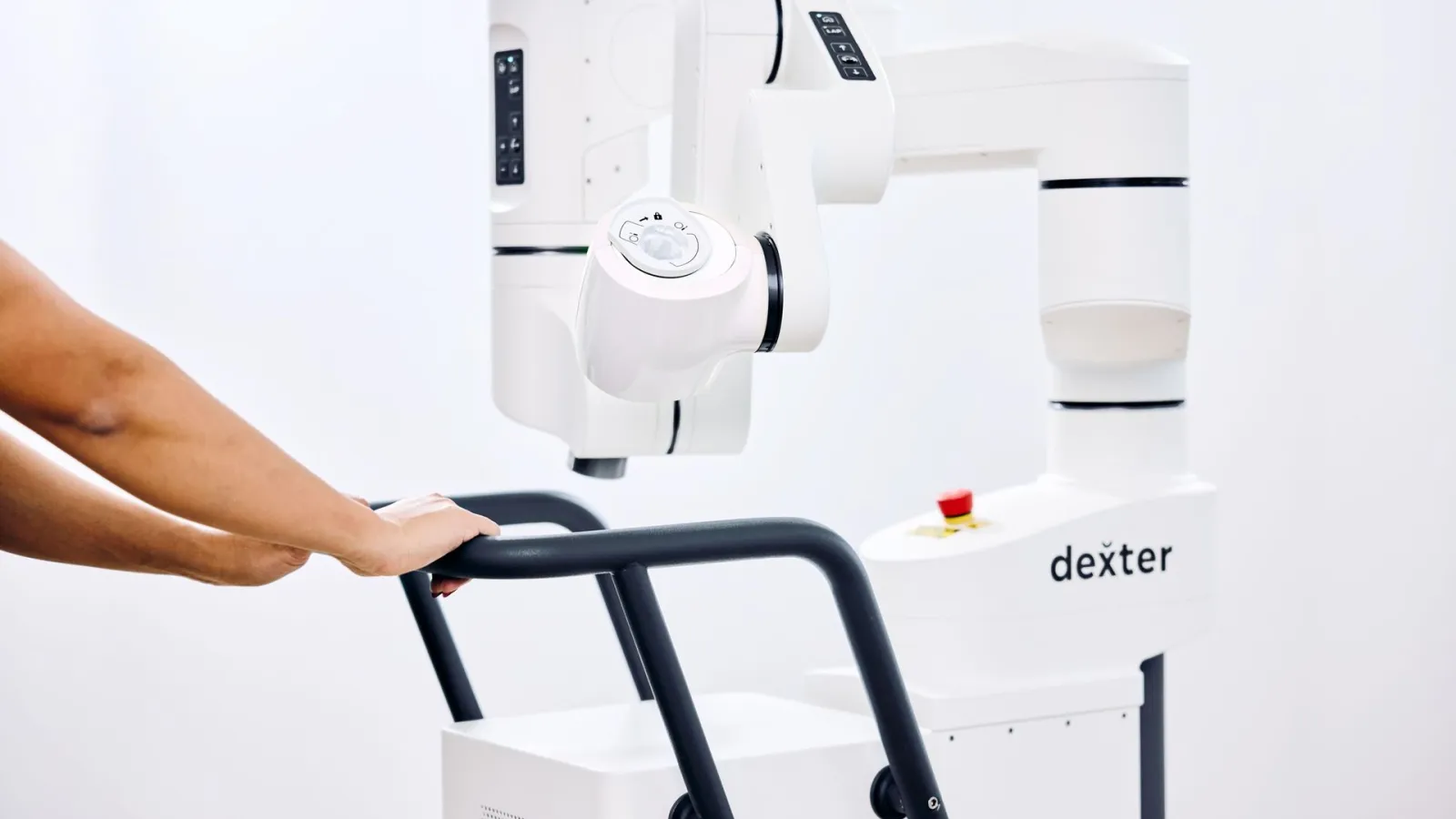
Distalmotion has secured a senior secured term loan of up to $70 million from Perceptive Advisors, a US healthcare-focused investment firm, to fund its commercial push into the American ambulatory surgery centre market. The Lausanne-headquartered company said the capital will support continued DEXTER rollout and further development of the system's instrument portfolio.
The financing is structured as a term loan rather than equity, allowing Distalmotion to avoid dilution while extending its commercial runway. The company did not disclose the facility's interest rate, maturity date, or any draw-down schedule attached to the full $70 million commitment.
The product and its market fit
DEXTER is a soft tissue surgical robot designed around the practical constraints of outpatient settings. Its small, mobile footprint allows it to be moved between operating rooms without facility modifications, and its single-use instrument suite eliminates the sterile reprocessing infrastructure that larger robotic platforms typically demand. In the US, the system holds FDA clearance for cholecystectomy, inguinal and ventral hernia repair, total benign hysterectomy, and a range of gynaecological procedures.
Greg Roche, chief executive of Distalmotion, said the new capital would allow the company to "accelerate our US growth strategy, strengthen our commercial presence, and continue to optimise DEXTER for ASC patients, surgeons, and administrators." Sam Chawla, portfolio manager at Perceptive, described DEXTER as "purpose-built for the ongoing shift of high-volume surgery to the ASC, where efficiency is paramount."
Competitive landscape and sector context
The ASC robotic surgery segment is attracting increasing investor attention as surgical volumes migrate out of hospital settings, driven by payer pressure, patient preference, and the economics of same-day procedures. Intuitive Surgical's da Vinci platform has historically dominated hospital-based robotic surgery, but its scale and capital requirements have made adoption difficult for the smaller, faster-turnover environment of an ASC.
Several companies are competing to fill that gap. Asensus Surgical has pursued a digital-laparoscopy approach, while CMR Surgical in Cambridge has positioned its Versius robot on a modular, multi-arm architecture that similarly targets cost-conscious settings. Distalmotion's argument is differentiation through simplicity: a single-arm system with a low learning curve and minimal capital infrastructure requirement, aimed at the highest-volume general and gynaecological procedures where robotic technique offers clear benefit over conventional laparoscopy.
The shift toward outpatient surgery is a structural trend rather than a cyclical one. US Centers for Medicare and Medicaid Services reimbursement policy has progressively expanded the list of procedures payable in ASCs, and private insurers have followed. That policy tailwind is a meaningful commercial enabler for purpose-built ASC robotic systems. Distalmotion will need to demonstrate durable procedural volume and surgeon retention data to convert lenders and future investors, but the market timing is favourable. Next milestones to watch include any update on European ASC deployments and whether the company pursues a further equity round or strategic partnership ahead of a potential exit.