
SI-BONE wins FDA 510(k) for iFuse Granite Onyx spinal screw system

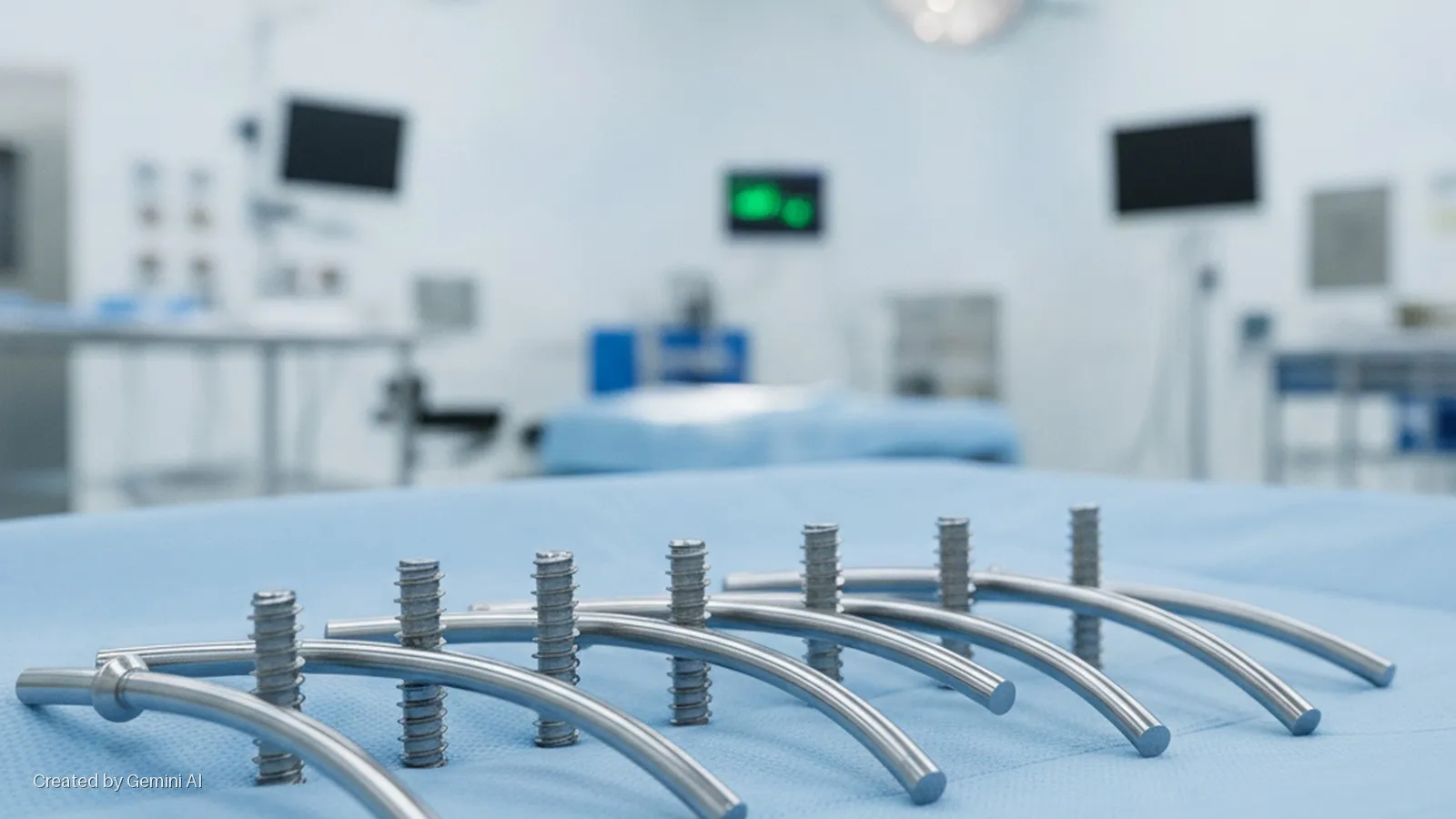
SI-BONE has received 510(k) clearance from the US Food and Drug Administration for its iFuse Granite Onyx System, a 3D-printed spinal fixation device designed to reduce screw loosening at the uppermost and lowermost vertebrae in multi-level fusion constructs. The clearance marks the Santa Clara company's first cleared product intended for use outside the pelvis, a meaningful step in its stated strategy of extending its compromised-bone platform into adjacent spinal indications.
The company says loosening at the upper and lower instrumented vertebrae affects as many as 27% of spinal fusion constructs, based on peer-reviewed literature it cited in the release. The problem is especially acute in patients with low bone density, who face elevated revision rates and, as one clinical adviser noted, are the least able to tolerate a return to the operating theatre.
The technology
Onyx is built on what SI-BONE describes as a bone-density-specific surface combined with an anatomy-specific thread form. The design intent is to accelerate osseointegration and dampen micromotion in the immediate post-operative period, with the goal of achieving early fixation before the screw-bone interface has time to fail. The company characterises it as the third device in its portfolio to receive FDA Breakthrough Device designation, following its iFuse Bedrock Granite system, which addressed fixation at the base of multi-level constructs.
Han Jo Kim, Professor and David B. Levine Endowed Chair in Spine Surgery at the Hospital for Special Surgery, said the system "gives surgeons the opportunity to face our understanding of construct loosening with a novel innovation that translates into a meaningful step forward for our patients." Gregory Mundis, Professor of Orthopaedic Spine Surgery at Scripps Clinic, added that Onyx is "designed around the mechanical realities of poor-quality bone." Both surgeons are disclosed as paid consultants to SI-BONE with royalty interests in the product.
Chief executive Laura Francis said the company believes Onyx will deepen its relationship with surgeons already using Granite and extend its reach to a broader group of spine surgeons who will want to incorporate the technology in fusion procedures.
Market context and competitive landscape
Spinal fixation in osteoporotic and osteopenic patients is a growing clinical challenge as populations age across North America, Europe, and Japan. Revision surgery in this group is both clinically risky and commercially costly, and it has attracted sustained product development activity from established players including Medtronic, Stryker, and Globus Medical, all of which offer pedicle screw systems with augmented surface treatments or cement-augmentation options aimed at the same problem.
SI-BONE's differentiation rests on its established 3D-printed osseointegration heritage and its Breakthrough Device designation, which signals that the FDA considered the device to address a serious or life-threatening condition with no adequate alternative. Breakthrough designation does not guarantee superior clinical outcomes, however, and head-to-head comparative evidence against existing augmented-fixation approaches is not yet available. Independent registry data and real-world revision-rate comparisons will be the tests that determine whether Onyx commands a durable position in this competitive segment.
SI-BONE reports that its technologies have supported more than 150,000 procedures since 2009, backed by four randomised controlled trials and over 190 peer-reviewed publications, a clinical evidence base that is relatively unusual for a medical device company of its scale and one that is likely to support surgeon confidence during the Onyx launch period.
Commercial availability and pricing have not been disclosed. Investors will be watching for the product's contribution to revenue in upcoming quarterly reports and for any expansion of the clinical evidence programme.