
Super Vision Technology performs world-first i-NYS implant for nystagmus

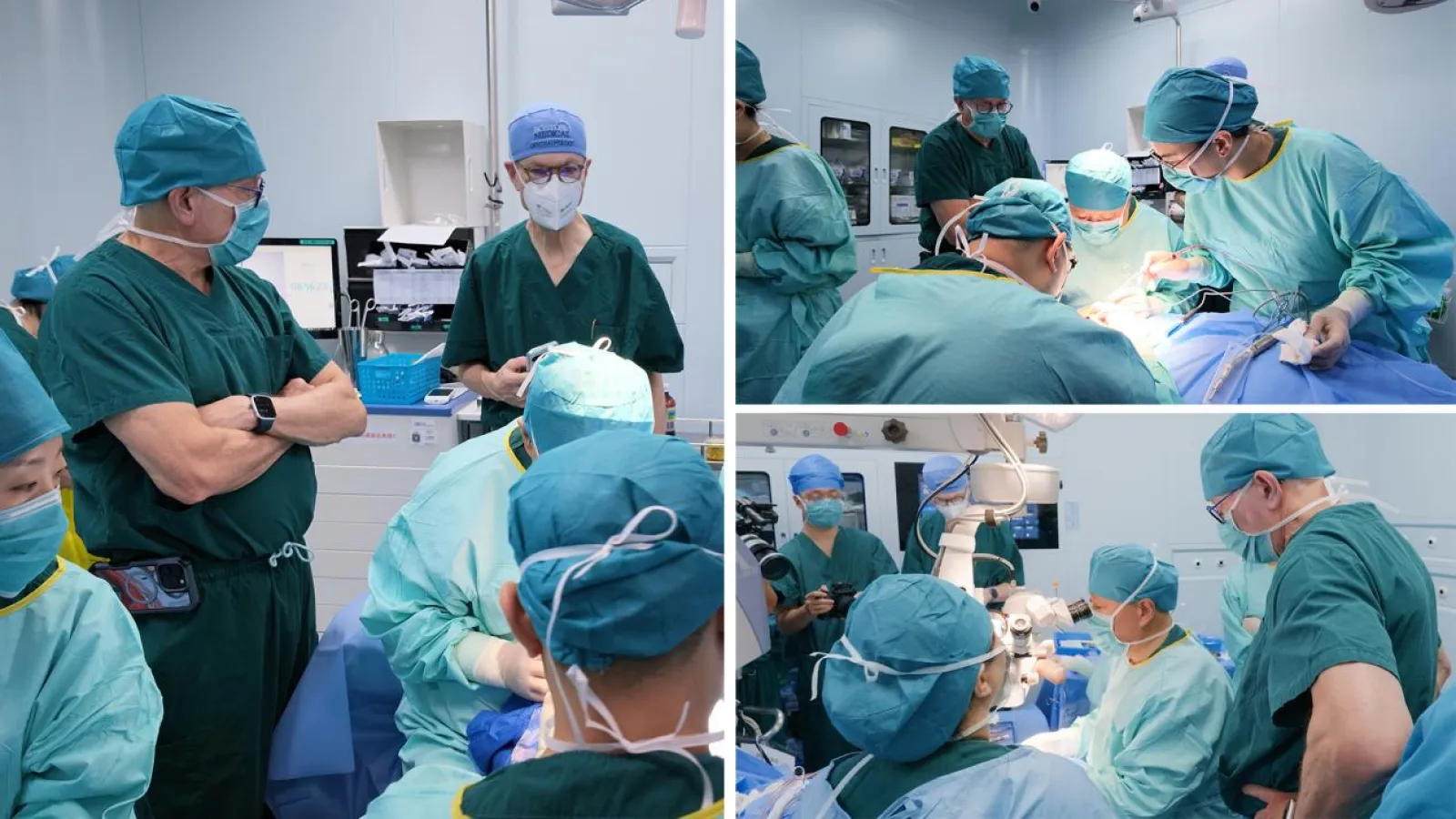
A 9-year-old boy treated at Peking University People's Hospital in Beijing has become the first patient in the world to receive the i-NYS, an implantable extraocular neuromuscular stimulator designed to treat congenital nystagmus. The procedure was performed on 25 August 2026, with the device activated and calibrated during a follow-up visit on 21 October.
The patient, from Beijing's Miyun District, had been under the care of the device's inventor, Professor Lejin Wang, since being referred by a local hospital at the age of three. Pre-operative assessments confirmed severely limited foveal fixation time, alongside diagnoses of astigmatism and amblyopia. The surgery represents the transition of the i-NYS from regulatory clearance to active clinical use.
How the device works
The i-NYS is a Class III implantable medical device. A miniature pulse generator is placed behind the ear and delivers personalised microelectric current to the lateral rectus muscle, suppressing the abnormal nerve impulses responsible for the characteristic involuntary eye movements of nystagmus. The intended outcome is a reduction in the frequency and amplitude of those movements, alongside improved foveal fixation time.
Professor Wang spent more than two decades developing the technology at Peking University People's Hospital. China's National Medical Products Administration granted marketing authorisation in March 2026 after the device entered the agency's innovative device review pathway in January 2024. The US Food and Drug Administration awarded Humanitarian Use Device designation in June 2025, a status that facilitates access for rare conditions affecting fewer than 8,000 patients annually in the United States, and does not by itself constitute marketing approval.
Two US-based specialists observed the implant procedure: Dr Stephen P. Christiansen, chair of ophthalmology and visual sciences at Boston University Chobanian and Avedisian School of Medicine, and Dr David I. Silbert, founder of Conestoga Eye.
Market context and regulatory outlook
Congenital nystagmus has historically been managed through optical aids, botulinum toxin injections, or surgical procedures that reposition the extraocular muscles. None of these approaches directly addresses the underlying neurological drive of the condition, and all carry limitations in durability or efficacy. Published estimates cited by Super Vision Technology suggest approximately 1.3 million patients in China and seven million globally carry a diagnosis of congenital nystagmus, positioning the addressable population as substantial if the device demonstrates robust long-term outcomes.
Super Vision Technology, the Beijing-based company that developed and is commercialising the i-NYS, has research and development operations in Beijing, Hong Kong, and the United States. The company describes itself as focused on ophthalmic medical devices and medical chip development.
For the device to reach patients outside China, Super Vision Technology will need to pursue a full FDA regulatory submission, likely via the De Novo or PMA pathway given the Class III risk classification. The HUD designation is an important but early step in that process. Clinicians and investors will be watching for peer-reviewed outcome data from this first implantation, as well as the timelines for any planned multicentre study that could underpin a broader regulatory filing. The intersection of neurostimulation and ophthalmology is an area attracting growing interest, and a validated implant for a historically untreatable inherited condition would represent a meaningful expansion of the neurostimulation device market.