
NVision publishes Nature paper on first addressable molecular qubit

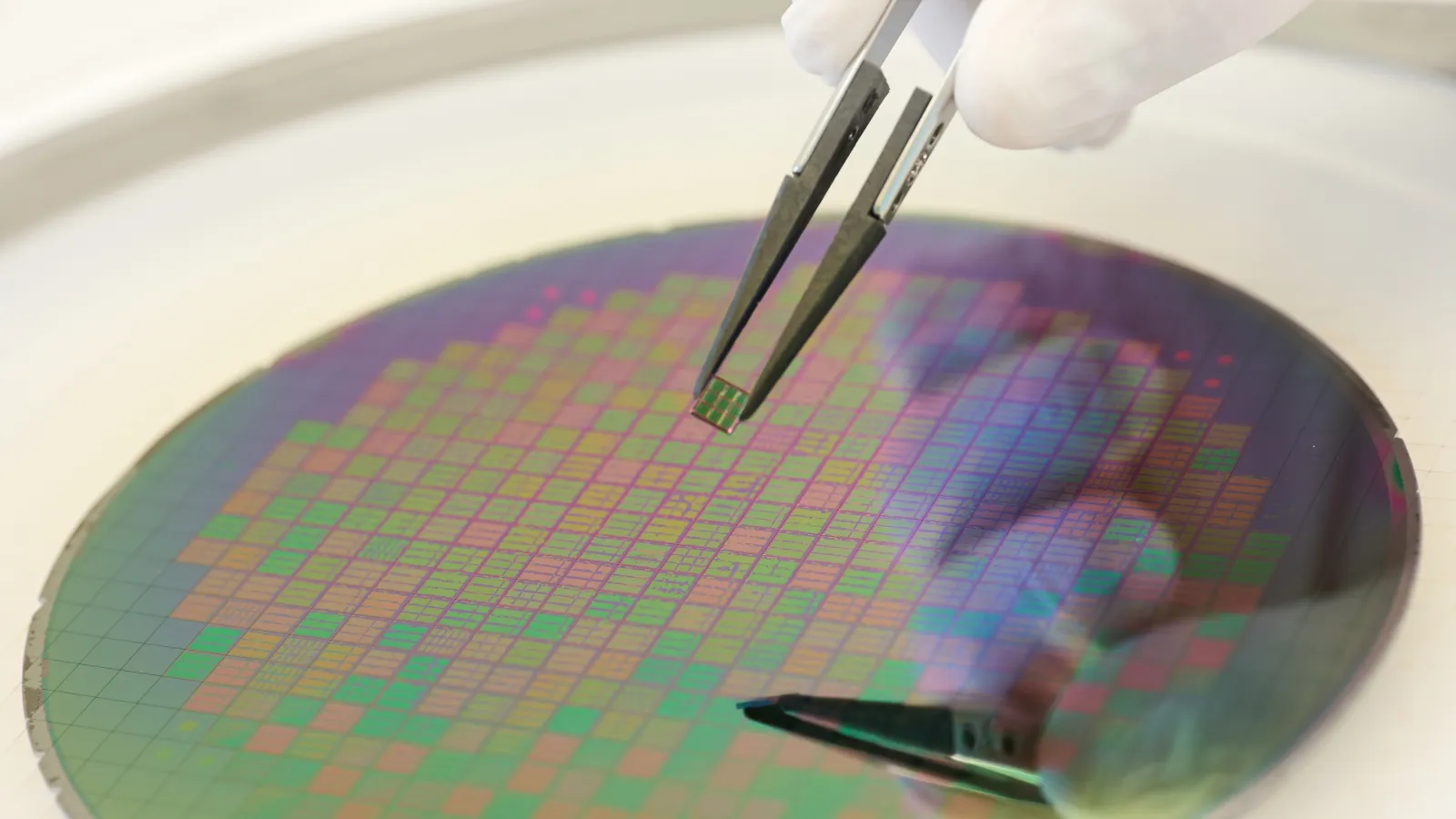
NVision Quantum Technologies has published peer-reviewed research in Nature confirming what the company describes as the first individually addressable organic molecular spin-photon interface, a milestone it says removes a fundamental barrier to using molecular spins as true qubits. The paper, titled "A Single-Molecule Spin-Photon Interface", is accompanied by a strategic partnership with thin-film lithium niobate photonics specialist HyperLight Corporation to integrate the molecular qubits directly onto photonic integrated circuits (PICs).
The Ulm-based company, founded in 2015, has built its technology around engineered carbene molecules that function at cryogenic temperatures between 2K and 4K and emit photons at precise optical frequencies. The key commercial proposition is that the molecules can be deposited as thin films in a process analogous to OLED manufacturing, making them compatible with existing silicon foundry infrastructure rather than requiring purpose-built fabrication plants.
The science
NVision's internal screening programme evaluated more than 150 candidate molecules, of which 40 were synthesised in the laboratory, before arriving at the carbene system described in the Nature paper. One notable characteristic is that the platform can tolerate up to 70% photon loss, which the company says means reliable operation does not depend on ultra-low-loss optical infrastructure.
Chief technology officer Dr Ilai Schwartz said that addressing quantum design at the molecular level allows the team to tune properties including quantum memory, gate speed and photon emission within a single molecule. "Because our qubits interact directly with light from the start, we achieve connectivity without proximity, making photonic networking a foundational capability of our platform rather than something we have to add later," he said.
The partnership with HyperLight extends HyperLight's TFLN Chiplet technology into quantum applications. First prototype integrated chips are expected in the fourth quarter of 2026, with a live on-chip performance demonstration also targeted before year-end. NVision's longer-term commercial roadmap targets 1,000 physical qubits scaling to 1,000 logical, fault-tolerant qubits by 2030 in a data-centre form factor.
Market context
NVision's announcement lands in a crowded and well-funded quantum hardware landscape where competing qubit modalities, including superconducting circuits, trapped ions, neutral atoms and photonic approaches, are all making competing claims about the path to practical scale. The manufacturing compatibility argument is a significant part of NVision's positioning: superconducting architectures, which currently dominate commercial quantum computing deployments from companies including IBM and Google, require dilution refrigerators and bespoke fabrication environments that remain expensive to replicate at scale.
Molecular and spin-based qubits have attracted growing academic interest, but translating laboratory demonstrations to manufacturable devices has historically been the sticking point. Publication in Nature provides independent peer review of the core science, though the gap between a validated single-molecule interface and a commercially deployable quantum processor remains substantial. Investors and enterprise customers will be tracking the Q4 2026 chip demonstration as the first practical proof point beyond the physics.
NVision's investor base includes Playground Global, DCVC, Entrée Capital, Matterwave Ventures and the European Investment Bank, reflecting a mix of deep-tech venture capital and public funding. The company also operates a separate clinical imaging platform, POLARIS, which uses quantum techniques on standard MRI systems, giving it a dual revenue pathway that is unusual among pure-play quantum hardware start-ups.