
Mubadala and Khalifa University launch UAE life sciences programme

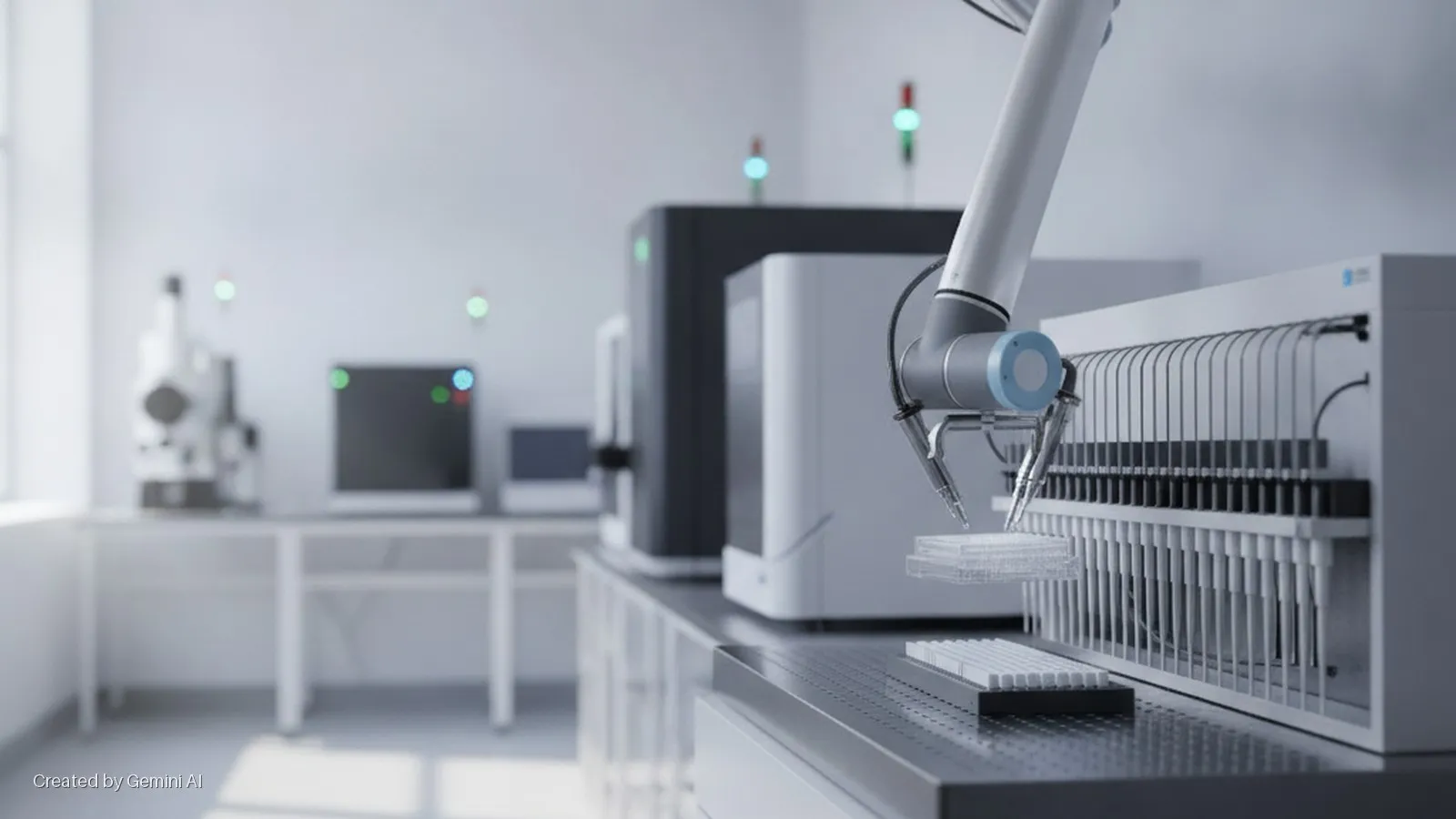
Mubadala Investment Company and Khalifa University of Science and Technology have signed a strategic research partnership to establish the Life Sciences Innovation Program (LSIP), announced at the Abu Dhabi Future Health Summit 2026. The programme will pool early-stage research capabilities across therapeutics, medical devices and other healthcare technologies, with Mubadala Bio and Khalifa University Enterprises Company (KUEC) acting as joint operators and Khalifa University serving as the delivery partner.
The agreement was signed by Dr Bakheet Al Katheeri, chief executive of Mubadala's UAE Investments Platform and chairman of Mubadala Bio; Professor Ebrahim Al Hajri, president of Khalifa University; and Amal Al Jaberi, chief executive of KUEC. No financial value for the partnership was disclosed, though the parties confirmed that Mubadala and KUEC will jointly fund a portfolio of projects spanning cardiometabolic disease, central nervous system disorders, oncology, musculoskeletal conditions, and men's and women's health.
Research infrastructure and the R&D laboratory
Alongside LSIP, Mubadala Bio plans to establish a commercial research and development laboratory on Khalifa University's main campus, housed within its College of Medicine and Health Sciences. The proposed facility is intended to focus on complex, high-value medicine formats, including sterile injectables, peptides and RNA therapies. It would support Mubadala Bio's existing UAE manufacturing companies as well as academic and industry partners.
Al Katheeri framed the initiative in supply-chain resilience terms: "Localising pharmaceutical manufacturing reduces reliance on external supply. Building a life sciences sector takes significant effort at every stage, from the research lab to the production line."
The LSIP structure reflects a broader acknowledgement that the UAE remains heavily dependent on imported medicines. Abu Dhabi's ambition to develop sovereign pharmaceutical manufacturing capacity has been articulated in national strategy documents, and Mubadala Bio already operates across biopharma and pharma logistics in the UAE, Asia, Africa and Europe. The new programme attempts to extend that manufacturing base upstream into discovery and early-stage development.
Market context
The Gulf Cooperation Council life sciences market has attracted increasing attention from international pharma and sovereign investors over the past several years, as governments in the region seek to reduce import dependency and build knowledge-economy jobs. Saudi Arabia's Vision 2030 and the UAE's National Strategy for Life Sciences both earmark funding for local R&D capacity, and a number of international contract development and manufacturing organisations have established regional presences in response.
The LSIP's explicit focus on translation, from academic discovery through to commercial application, positions it as an attempt to close a gap that has historically limited Gulf-region biotech: the absence of a deep local pipeline feeding into manufacturing facilities. Whether the partnership can generate commercially viable outputs will depend on the quality and volume of early-stage projects funded, and on the attraction and retention of specialist scientific talent in Abu Dhabi. The planned internship and talent-development component, linking Khalifa University students with Mubadala Bio's production lines, is a meaningful element of the longer-term ecosystem-building effort, though the timescale for measurable outputs has not been specified.
The next observable milestones will be the opening of the on-campus R&D laboratory and the announcement of the first funded project portfolio under LSIP.