
IBA launches NEPTIS Perform Duo for tracer development and production

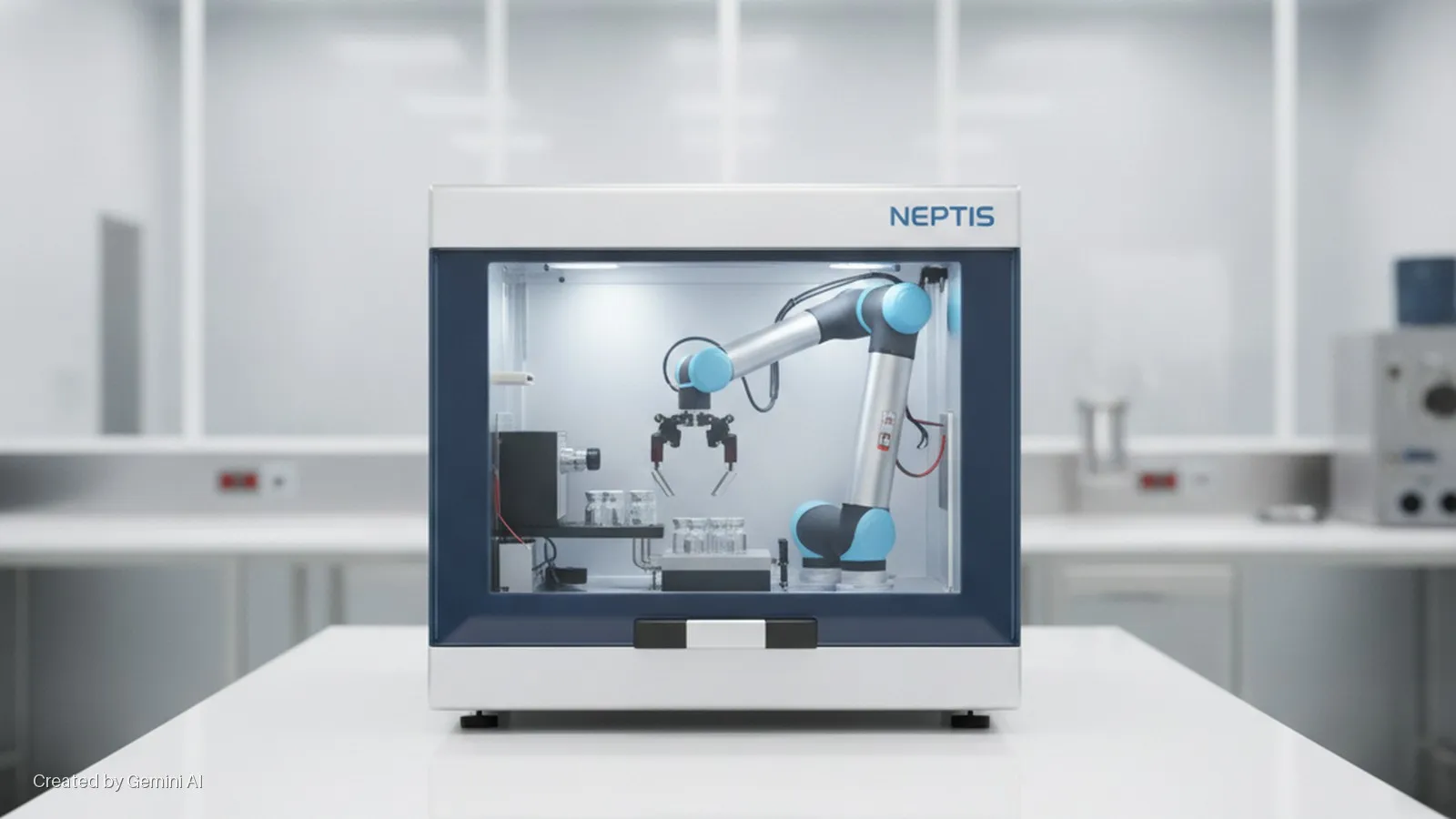
IBA (Ion Beam Applications S.A.) has unveiled NEPTIS Perform Duo, a radiopharmaceutical synthesizer designed to handle both tracer development and commercial production on a single platform. The product was launched on 18 October at the EANM'26 Congress in Vienna and marks the first new product to emerge from IBA's acquisition of ORA, the radiochemistry equipment specialist it bought in December 2025.
The announcement positions NEPTIS Perform Duo as a direct response to an operational friction point in the radiopharmaceutical sector. Developing a new positron emission tomography (PET) imaging tracer typically requires many iterative runs, and most synthesizer platforms consume a new single-use kit with each attempt. Producers that both develop and manufacture tracers have, as a result, commonly relied on two distinct systems, one optimised for the small-batch chemistry of research, another configured for compliant, high-throughput production.
One module, one qualification path
NEPTIS Perform Duo addresses this by combining reusable components for the development phase with the same single-use cassettes and chemistries used in the established NEPTIS Perform platform for routine production. IBA says the reusable development components were cycled more than 30 times in internal testing, lowering consumable costs relative to single-use-only workflows. Critically, because the hardware and process chemistry remain constant across both phases, the qualification pathway for regulatory submission covers one system rather than two.
The module is compatible with fluorodeoxyglucose (FDG), the most widely used PET tracer, and joins NEPTIS Perform and NEPTIS xSeed in IBA's existing synthesizer range. The company is positioning the product at contract manufacturers, commercial radiopharmaceutical producers and radiopharmacy networks.
Loik-Mael Nys, President of IBA RadioPharma Solutions, said the device offers customers "a simpler and more economical way to take a new compound from first run to routine production," adding that the unified platform should help bring new diagnostic options to patients more quickly.
Market context
The radiopharmaceutical sector is experiencing a pronounced upturn in commercial interest, driven largely by the clinical and commercial success of targeted radioligand therapies. That momentum has drawn capital and deal activity across the full supply chain, from cyclotron manufacturers and isotope producers through to contract radiosynthesis and dose-distribution networks. IBA's acquisition of ORA, and the subsequent integration of ORA's 20-year radiochemistry track record and roughly 600 installed NEPTIS sites across more than 50 countries, reflects a broader industry consolidation trend in which particle accelerator and production-equipment players are seeking to offer end-to-end solutions.
For radiopharmacies and contract manufacturers considering capacity expansion, the single-module proposition also carries a regulatory efficiency argument. Regulators require manufacturers to qualify each production system; consolidating development and manufacturing hardware reduces that burden and may compress the timeline between tracer discovery and first commercial batch. Whether that advantage proves durable will depend on how competitors such as Eckert and Ziegler, Comecer and Trasis respond, as all operate in the automated radiosynthesis space.
IBA is listed on Euronext and employs approximately 2,300 people from its base in Louvain-la-Neuve, Belgium. The company's RadioPharma Solutions division sits alongside its proton therapy, industrial sterilisation and dosimetry businesses.